
2.3
Breech Presentation And Delivery
Obstetrics & Gynaecology Protocols, Version 3.0, 2017. Chapter 2, Labour Ward.
Clinical description
The fetus that presents in (complete or frank) breech presentation may be delivered vaginally if investigated and/or conditions are favourable.
Signs and symptoms
HistoryCheck for a possible cause of the breech presentation, i.e. placenta praevia, congenital fetal abnormalities, uterine masses and intrauterine abnormalities ExamBallotable mass consistent with fetal head in the fundus, broad irregular mass in the lower pole InvestigationsConfirm breech presentation and rule out fetal abnormalities with US at ≥ 36 wks gestation and prior to caesarean delivery
Treatment
- After discussion with consultant and patient, can attempt external cephalic version at ≥ 36 wks gestation if
there are no contraindications to vaginal delivery and emergency caesarean section is possible.
- ECV should be undertaken with informed consent.
- The procedure is made easier using a tocolytic, such as salbutamol 250 micrograms IV, shortly
before the procedure.
- A CTG should be performed before and after the procedure and a portable ultrasound machine is
useful to confirm successful version.
- Absolute contraindications include:Rh negative status, uterine scar,abnormal placentation, and
suspected fetal compromise.
- Relative contraindications include: oligohydramnios, anterior placenta, HIV-infected
- For women at 39 weeks or more, an option is to offer ECV just prior to elective CS, then either
cancelling the procedure if successful or proceeding to surgery if unsuccessful.
- Counsel (with patient and senior colleagues) on mode of delivery (vaginal breech delivery vs. caesarean
section.
- Recommend caesarean section especially if:
- Large baby with EFW ≥ 3.5 kg
- BPD > 9.5 cm
- Footling breech
- Extended head
- Clinically small pelvis
- Nulliparous (primigravida)
- Concomitant soft indications for caesarean delivery (i.e. preeclampsia)
- Book caesarean section for 39 – 40 weeks EGA
- If assisted breech vaginal delivery to be attempted, then steps include:
- First stage – preferably spontaneous onset and progress of labour
Open partograph IV access Hb, group and save Consider caesarean delivery for any delay in labour
- Second stage
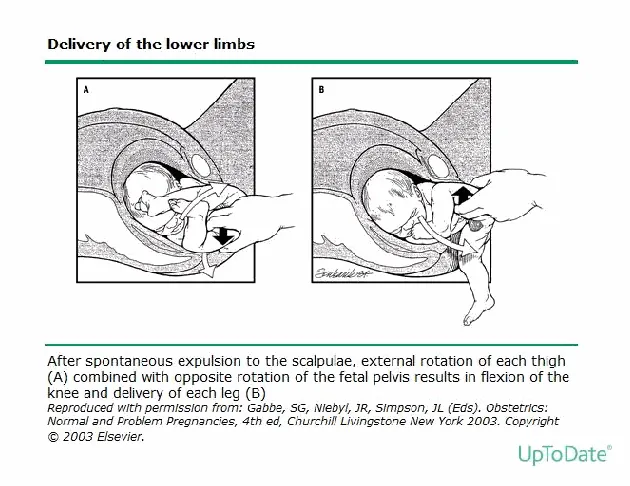
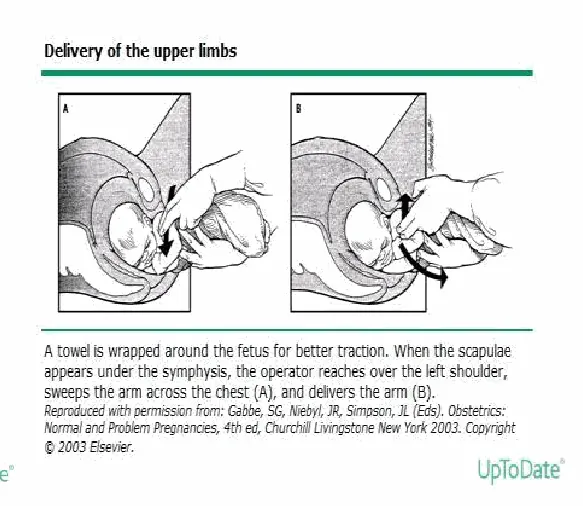
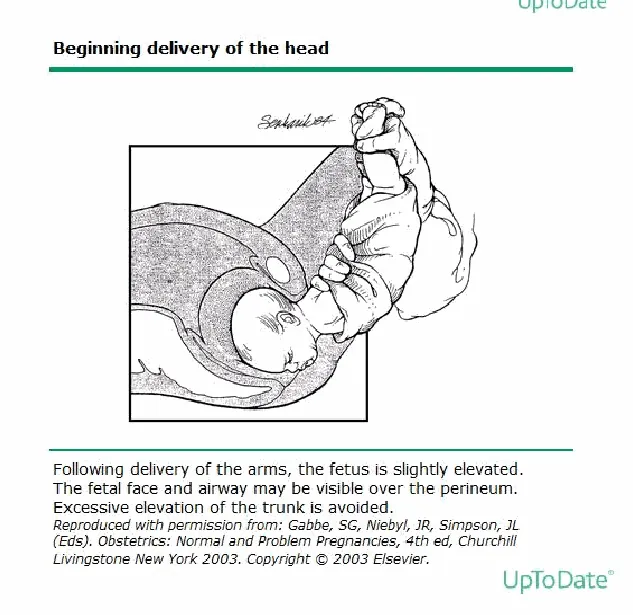
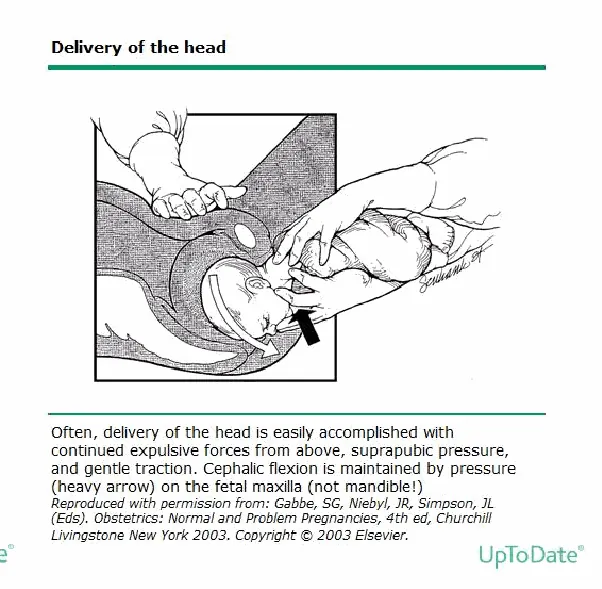
Delivery to be conducted by the most experienced person (i.e. registrar or senior midwife) Consider episiotomy Lovset manoeuvre (if necessary) for extended arms Delivery of the after-coming head by any of the following methods:
Mauriceau-Smellie-Veit manoeuvre: the middle finger of one hand is placed in the mouth, and the second and fourth fingers are placed on the malar eminences to promote flexion and descent while counter-pressure is applied to the occiput with the middle finger of the other hand Pipers forceps: fully dilated cervix, ruptured membranes, +/- episiotomy, empty bladder, adequate analgesia and adequate contractions. There should be no
Clinical description
concern for cephalopelvic disproportion.
Reference: UpToDate
Tables and figures
Check doses against the printed guideline and your clinical judgement before treating a patient. Spotted an error? Report it from the contact links below.
Need this without data?
The app holds every guideline on your device, with calculators, bookmarks and notes.