
2.12
Oligohydramnios And Polyhydramnios
Obstetrics & Gynaecology Protocols, Version 3.0, 2017. Chapter 2, Labour Ward.
Clinical description
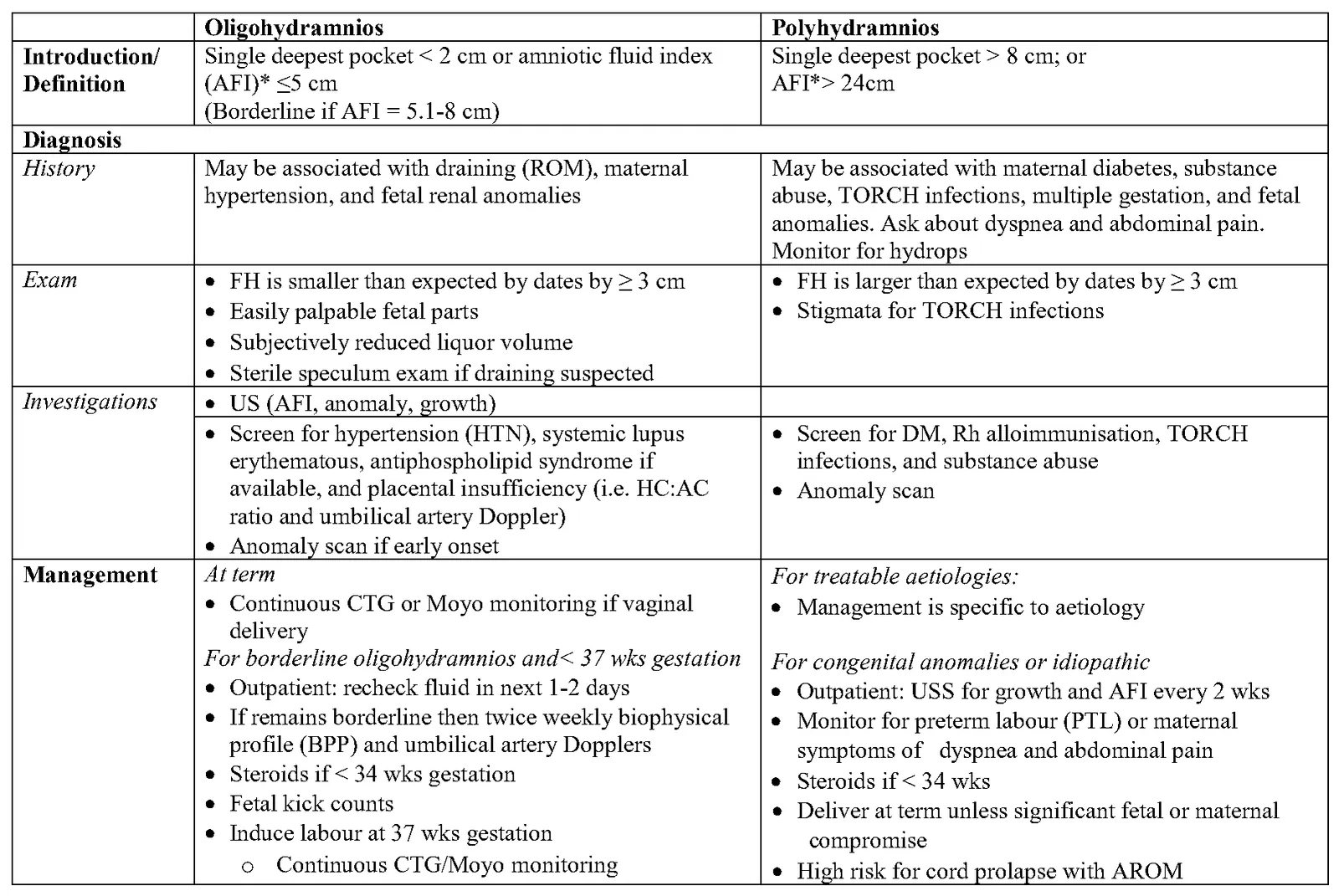
Oligohydramnios Polyhydramnios Introduction/ Single deepest pocket < 2 cm or amniotic fluid index Single deepest pocket > 8 cm; or Definition (AFI)* ≤5 cm AFI*> 24cm (Borderline if AFI = 5.1-8 cm)
Signs and symptoms
History May be associated with draining (ROM), maternal May be associated with maternal diabetes, substance hypertension, and fetal renal anomalies abuse, TORCH infections, multiple gestation, and fetal anomalies. Ask about dyspnea and abdominal pain.
Monitor for hydrops Exam • FH is smaller than expected by dates by ≥ 3 cm • FH is larger than expected by dates by ≥ 3 cm
- Easily palpable fetal parts • Stigmata for TORCH infections
- Subjectively reduced liquor volume
- Sterile speculum exam if draining suspected
Investigations • US (AFI, anomaly, growth)
- Screen for hypertension (HTN), systemic lupus • Screen for DM, Rh alloimmunisation, TORCH
erythematous, antiphospholipid syndrome if infections, and substance abuse available, and placental insufficiency (i.e. HC:AC • Anomaly scan ratio and umbilical artery Doppler)
- Anomaly scan if early onset
Management At term For treatable aetiologies:
- Continuous CTG or Moyo monitoring if vaginal • Management is specific to aetiology
delivery For borderline oligohydramnios and< 37 wks gestation For congenital anomalies or idiopathic
- Outpatient: recheck fluid in next 1-2 days • Outpatient: USS for growth and AFI every 2 wks
- If remains borderline then twice weekly biophysical • Monitor for preterm labour (PTL) or maternal
profile (BPP) and umbilical artery Dopplers symptoms of dyspnea and abdominal pain
- Steroids if < 34 wks gestation
- Steroids if < 34 wks
- Fetal kick counts
- Deliver at term unless significant fetal or maternal
- Induce labour at 37 wks gestation
compromise
- Continuous CTG/Moyo monitoring
- High risk for cord prolapse with AROM
Clinical description
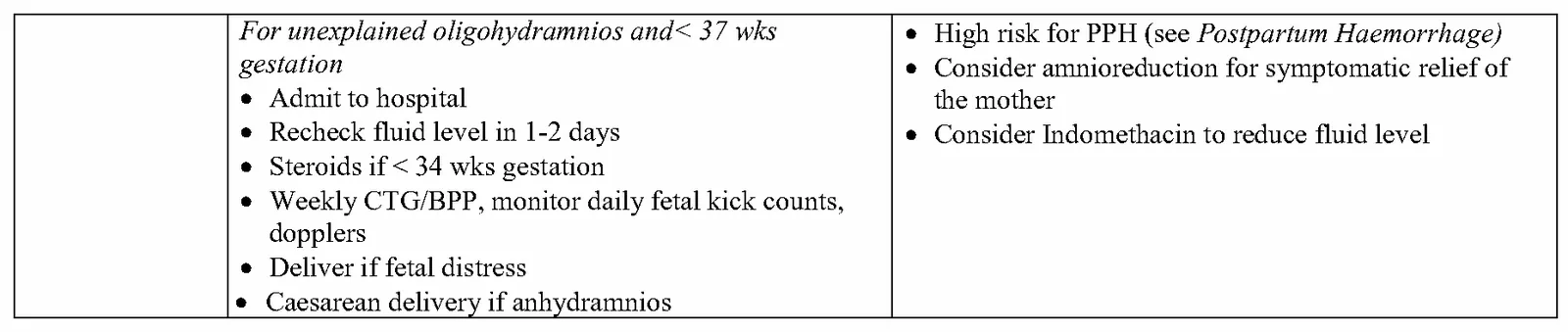
For unexplained oligohydramnios and< 37 wks • High risk for PPH (see Postpartum Haemorrhage) gestation • Consider amnioreduction for symptomatic relief of
- Admit to hospital the mother
- Recheck fluid level in 1-2 days • Consider Indomethacin to reduce fluid level
- Steroids if < 34 wks gestation
- Weekly CTG/BPP, monitor daily fetal kick counts,
dopplers
- Deliver if fetal distress
- Caesarean delivery if anhydramnios
Consider performing AFI three times and taking the average
Tables and figures
Check doses against the printed guideline and your clinical judgement before treating a patient. Spotted an error? Report it from the contact links below.
Need this without data?
The app holds every guideline on your device, with calculators, bookmarks and notes.