
4.7
Comatose Patient
Obstetrics & Gynaecology Protocols, Version 3.0, 2017. Chapter 4, Gynaecology.
Clinical description
The comatose patient requires prompt attention. Coma is a state of deep unconsciousness for a prolonged or indefinite period of time.
Signs and symptoms
History Elicited from relatives or the ambulance workers: onset of coma, condition in which patient was found, fever, convulsions, any pertinent chronic medical illnesses (i.e. diabetes or asthma), alcohol and/or substance abuse, poisoning, suicide note, etc. Minimal OB history includes parity, GA, and history of PVB.
Exam/Investigations Temperature, vitals/O2 saturation, pallor, jaundice, cyanosis, neck stiffness, Glasgow Coma Scale* (GCS), neurological exam (pupillary reaction, deep tendon reflexes), abdominal exam for peritonitis and/or haemoperitoneum (to assess for uterine rupture or abruptio placentae), check breath for alcohol and/or ketones
Treatment
- Call for help
- Airway: ventilate if patient is cyanotic
- Breathing: intubate if no spontaneous breathing
- Circulation (check pulse and BP): resuscitate if signs of shock
- Insert urinary catheter, monitor urine output, and check UPT
- Send blood for glucose, FBC, U&Es, and Malaria
- Send blood and urine for culture
- Start IV line
- Treat with 50 ml of 50% dextrose unless glucose is confirmed as normal
- If organophosphate poisoning suspected, then treat with atropine 0.6-2.4 mg IV every 15 min until normal
PR, dilatation of pupils, etc. Obtain physician consultation.
- Admit patient to HDU (high dependency unit)
- Monitor VS, GCS, and pupillary reaction
If poisoning, then monitor every 30 min until normal
- Perform LP if no contraindication
- Consider Head CT if not improvement within 24 hours or neurological exam suggests possible
stroke
- Take full history when possible
- Nursing care
- Feeding via nasogastric tube
- 2 hourly turnings
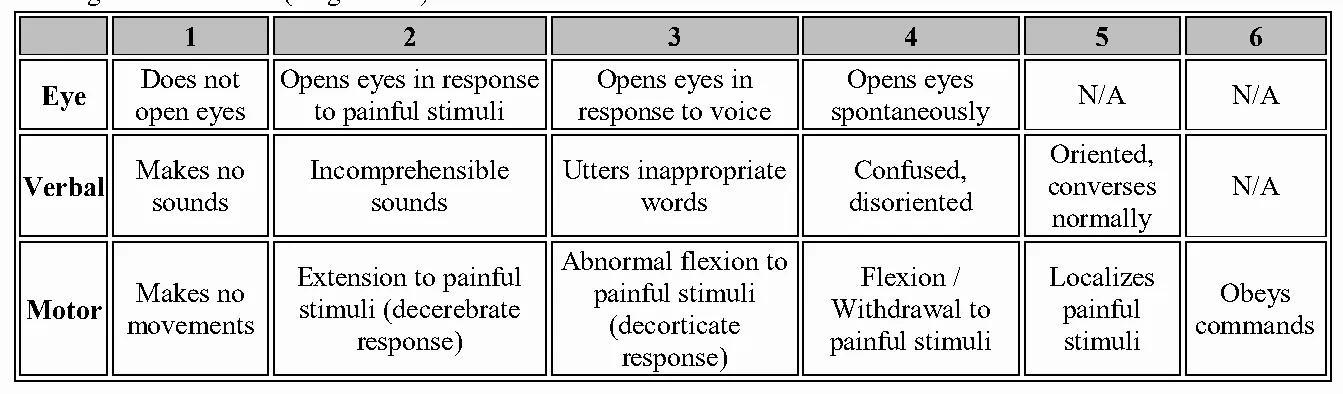
*Glasgow Coma Scale (range: 3-15) 1 2 3 4 5 6 Does not Opens eyes in response Opens eyes in Opens eyes Eye N/A N/A open eyes to painful stimuli response to voice spontaneously Oriented, Makes no Incomprehensible Utters inappropriate Confused, Verbal converses N/A sounds sounds words disoriented normally Abnormal flexion to Extension to painful Flexion / Localizes Makes no painful stimuli Obeys Motor stimuli (decerebrate Withdrawal to painful movements (decorticate commands response) painful stimuli stimuli response)
Tables and figures
Check doses against the printed guideline and your clinical judgement before treating a patient. Spotted an error? Report it from the contact links below.
Need this without data?
The app holds every guideline on your device, with calculators, bookmarks and notes.