Skip to content
Malawi Clinical GuidelinesGuidelinesGet app

2.2.2

In-patient Management — the 8-8-8 Schedule

Guidelines for the Treatment of Malaria in Malawi, 6th Edition, 2025. Chapter 1, Severe Malaria.

Treatment

The health worker should consider following the 8-8-8 schedule (described in Boxes 1–3 below) in the management of patients with severe malaria.

Box 1: Take 8 Immediate Measures
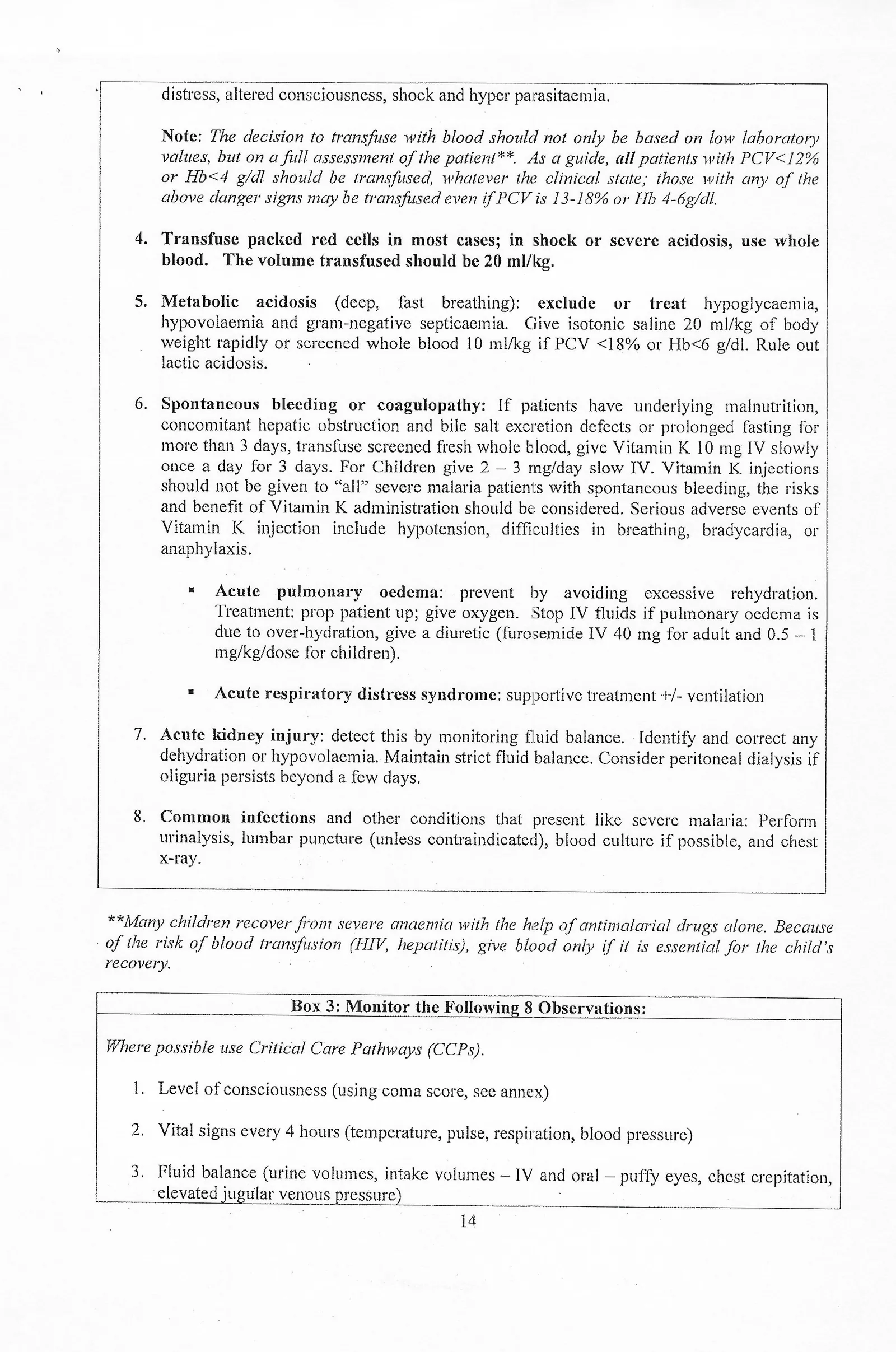
Box 1 — 8 Immediate Measures: airway, IV line, blood smear, dehydration, fever, convulsions, hypoglycaemia, start artesunate
Box 1 — 8 Immediate Measures: airway, IV line, blood smear, dehydration, fever, convulsions, hypoglycaemia, start artesunate. Open the image to zoom.

Box 2: Look for and Deal with 8 Complications
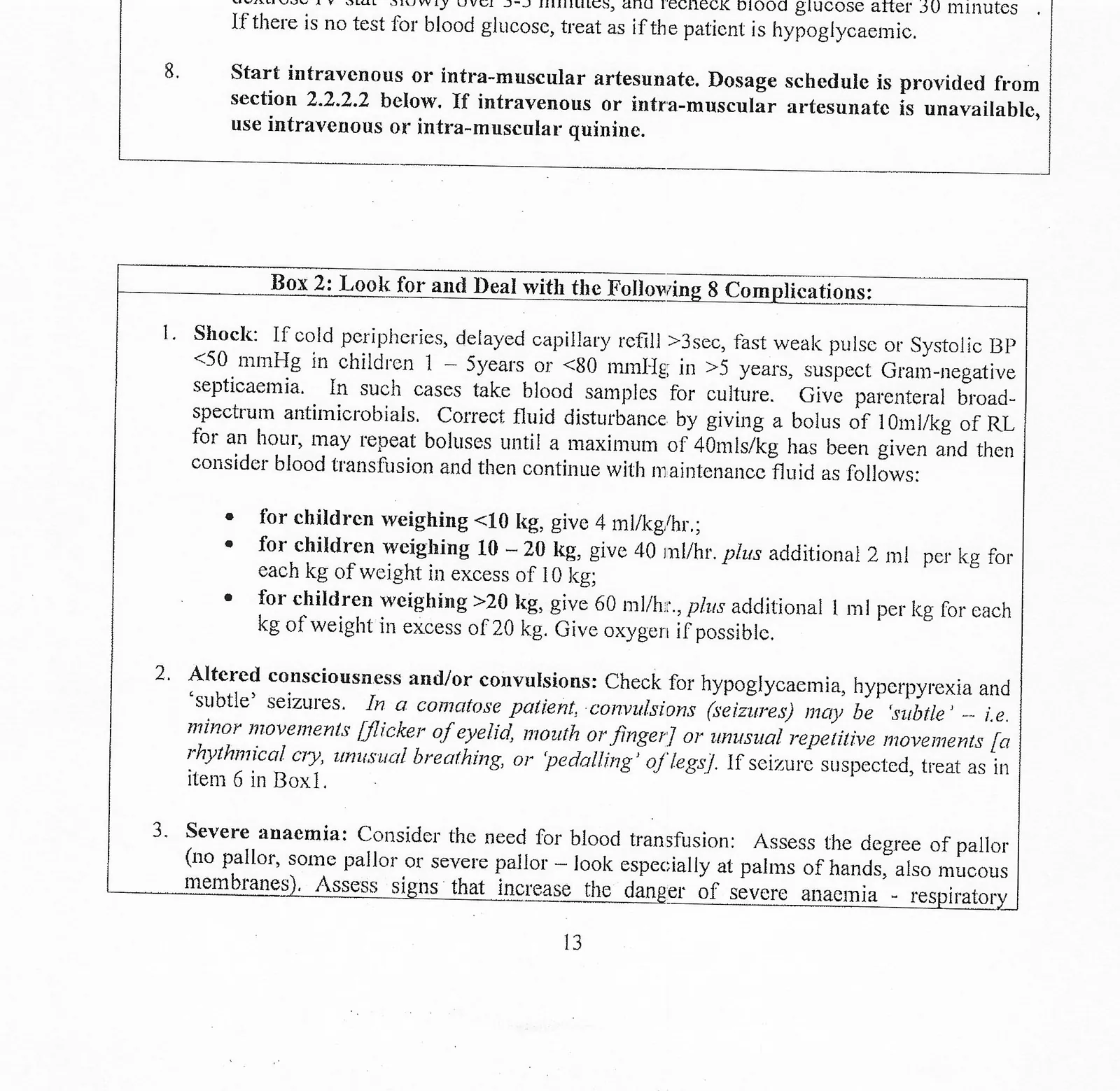
Box 2 — 8 Complications: shock, altered consciousness/convulsions, severe anaemia, transfusion, metabolic acidosis, spontaneous bleeding/coagulopathy, acute kidney injury, common infections
Box 2 — 8 Complications: shock, altered consciousness/convulsions, severe anaemia, transfusion, metabolic acidosis, spontaneous bleeding/coagulopathy, acute kidney injury, common infections. Open the image to zoom.

Box 3: Monitor 8 Observations

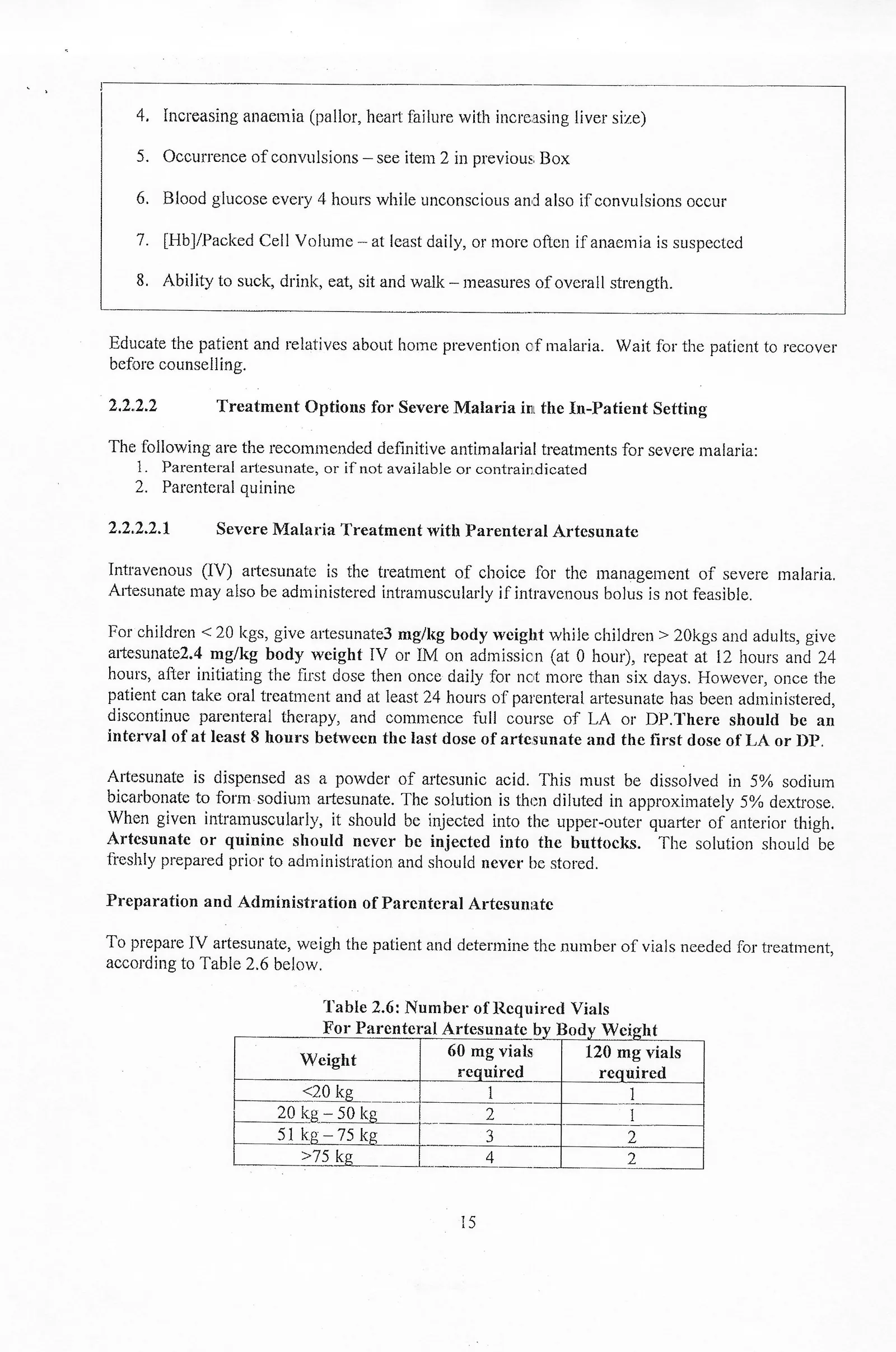
Box 3 — 8 Observations: consciousness, vital signs, fluid balance, anaemia, convulsions, blood glucose, Hb/PCV, ability to eat/drink/walk
Box 3 — 8 Observations: consciousness, vital signs, fluid balance, anaemia, convulsions, blood glucose, Hb/PCV, ability to eat/drink/walk. Open the image to zoom.

Educate the patient and relatives about home prevention of malaria. Wait for the patient to recover before counselling.

Check doses against the printed guideline and your clinical judgement before treating a patient. Spotted an error? Report it from the contact links below.

Need this without data?

The app holds every guideline on your device, with calculators, bookmarks and notes.