
1.3
First-line Treatment — Multiple First-line Therapies (MFT)
Guidelines for the Treatment of Malaria in Malawi, 6th Edition, 2025. Chapter 2, Uncomplicated Malaria.
Treatment
MoH recommends the use of MFT in the treatment of uncomplicated malaria. Currently, DP and LA are part of MFT for uncomplicated malaria. The clinical objectives of treating uncomplicated malaria are to cure the infection as rapidly as possible and prevent progression to severe disease.
Artemisinin Combination treatments should be used to treat malaria in pregnant women in the first trimester of pregnancy except where the other partner drug is contraindicated as in Artesunate + SulphadoxinePyremethamine (SA+SP).
Dihydroartemisinin-Piperaquine (DP)
DP is one of the two first line treatments for uncomplicated malaria in Malawi. The dosing regimen currently recommended by the manufacturer provides adequate exposure to piperaquine and excellent cure rates (> 95%), except in children < 5 years, who have 3 times risk of treatment failure because of lower plasma piperaquine concentrations. Children weighing < 25 kg should receive at least 2.5 mg/kg dihydroartemisinin and 20 mg/kg piperaquine to achieve the same exposure as persons > 25 kg. DP should be given once a day for three days.
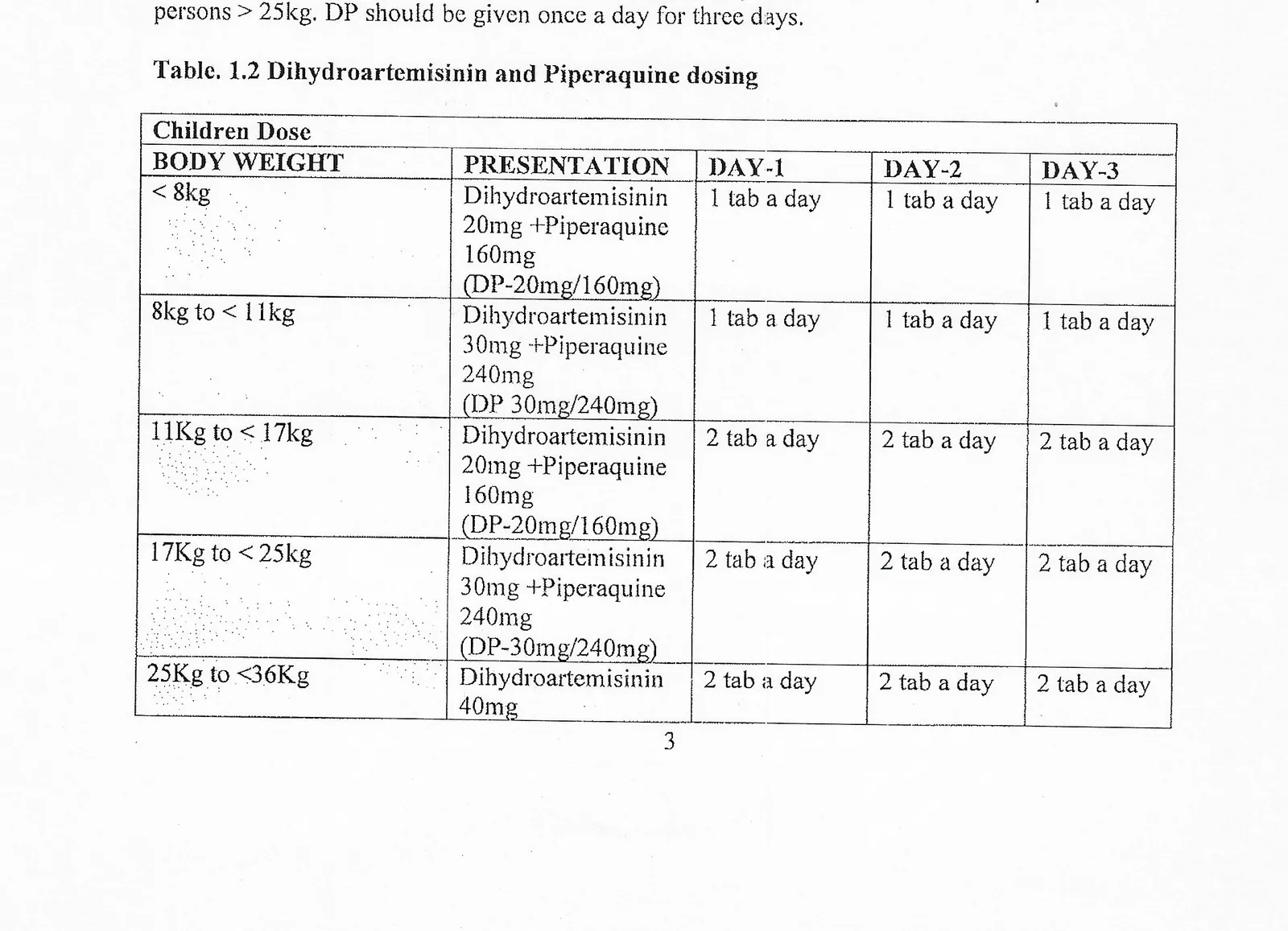
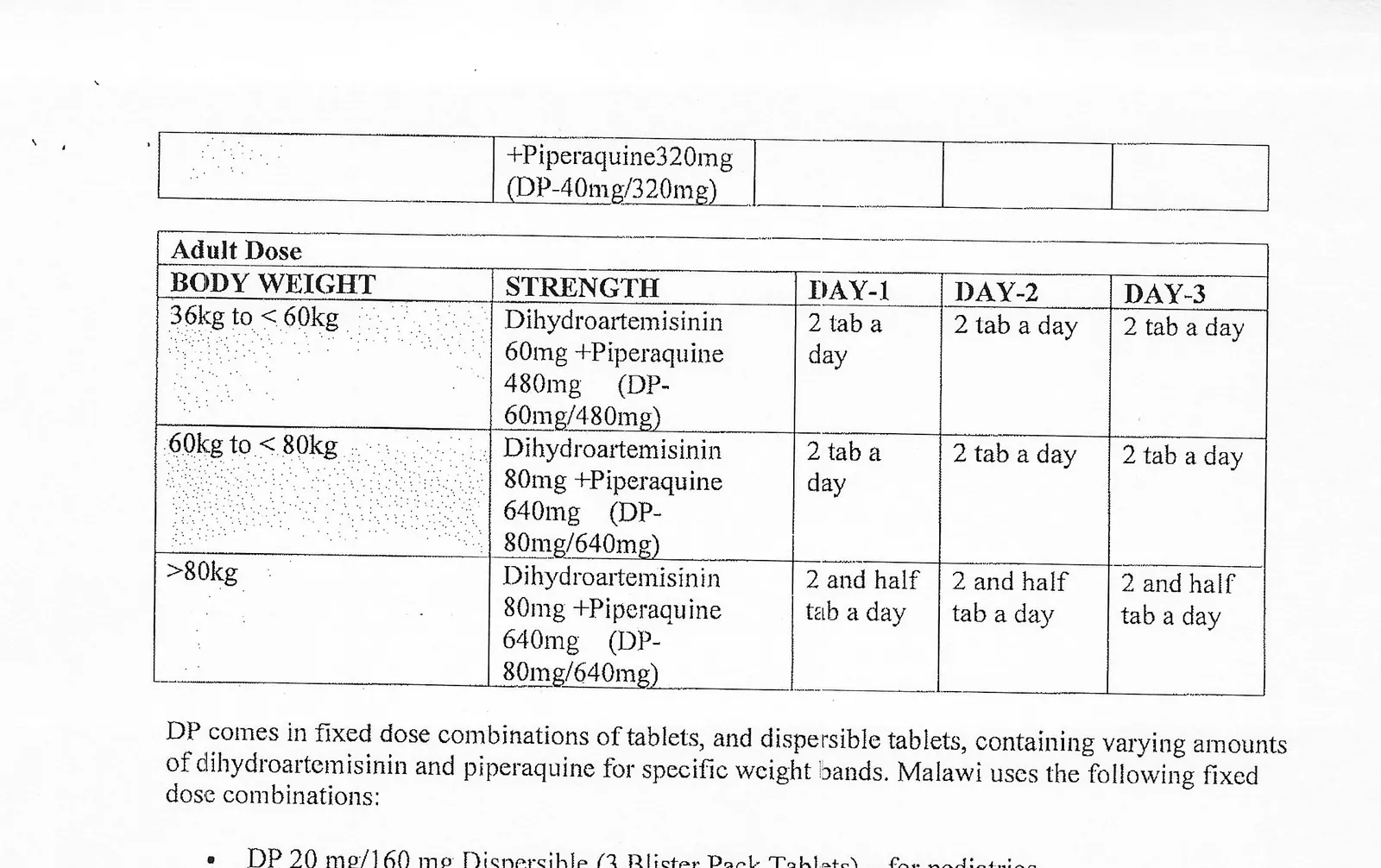
Cautions with DP include risk of prolonged QT interval and risk of possible arrhythmias although less than quinine. It should not be used in patients with congenital QT prolongation or on medications that prolong the QT interval. No dosage adjustment is recommended for pregnant women. Malnourished children are at increased risk for treatment failure; they should be monitored closely.
Lumefantrine-Artemether (LA)
Lumefantrine-artemether is one of the two first line treatments for uncomplicated malaria in Malawi. It is an ACT and comes in 'fixed-dose combinations'. Each tablet contains either artemether (20 mg) and lumefantrine (120 mg). It comes in two oral formulations: 1) dispersible LA [LA (D)], 2) non-dispersible LA [LA (ND)]. LA (ND) should be used in older children weighing 25 kg or more and adults. LA (D) should be used in children weighing less than 25 kg.
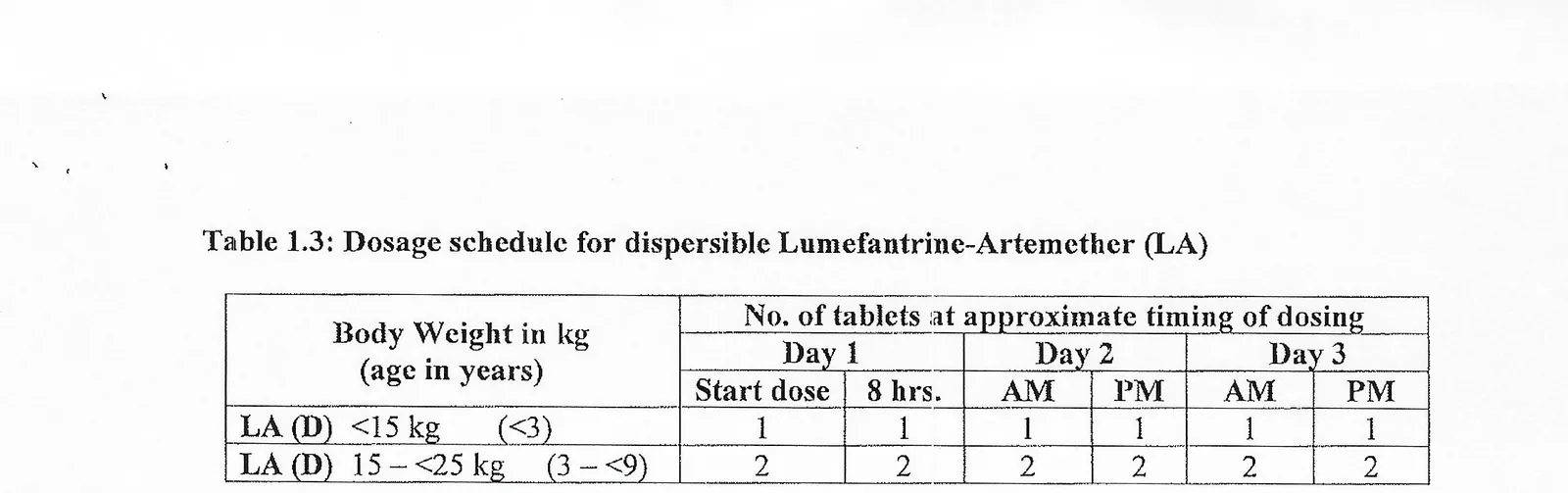
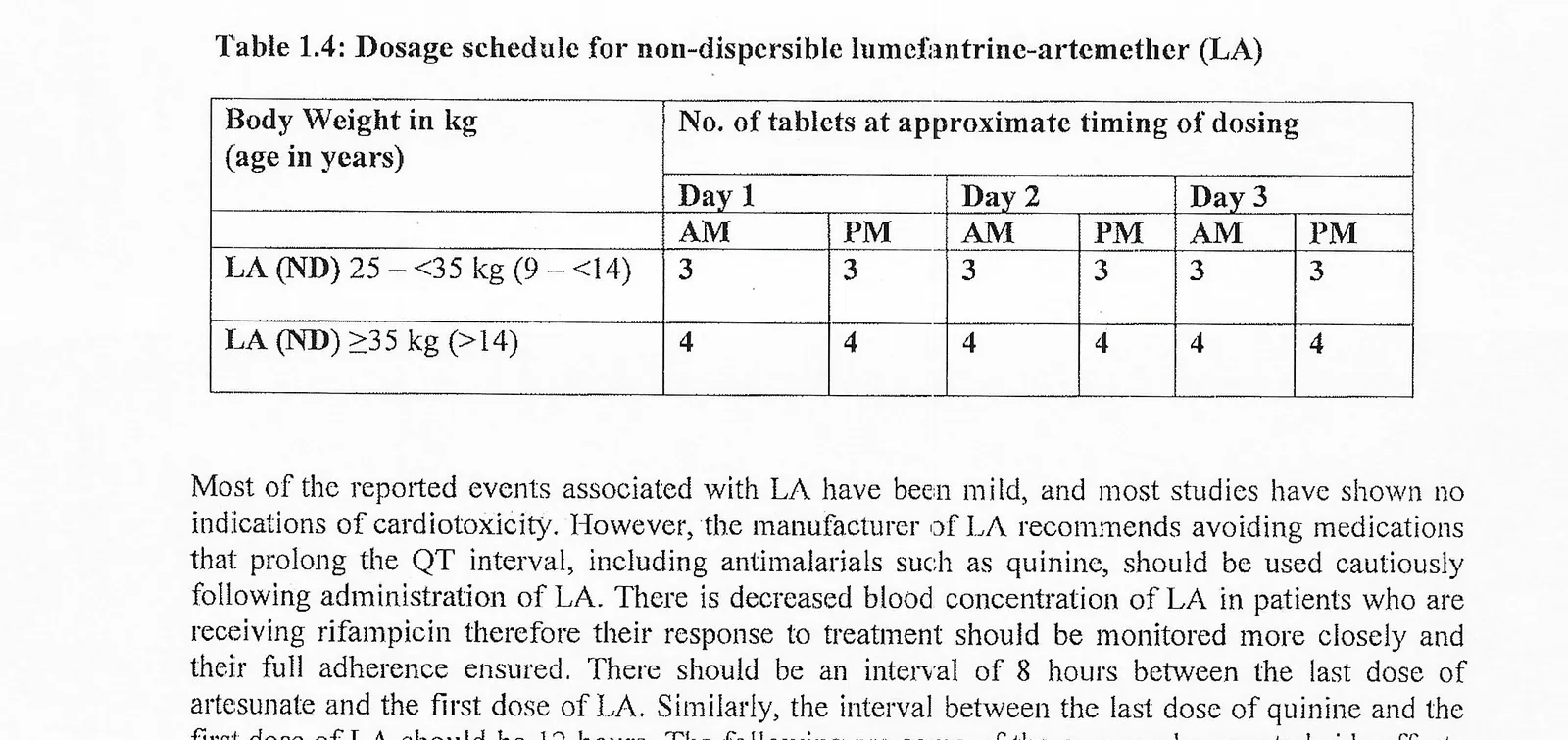
The treatment regimen for LA (D) is six doses (twice per day for three days) according to the body weight or age. The second dose is given 8 hours after the first dose, thereafter doses are given after every 12 hours. Each dose of LA should be taken with food to optimize absorption. Milk has been shown to improve the absorption of the lumefantrine component. The dose should be repeated if the medicine is vomited within 30 minutes of ingestion.
There should be an interval of 8 hours between artesunate and the first dose of LA. Similarly, the interval between the last dose of quinine and the first dose of LA should be 12 hours.
Check doses against the printed guideline and your clinical judgement before treating a patient. Spotted an error? Report it from the contact links below.
Need this without data?
The app holds every guideline on your device, with calculators, bookmarks and notes.