
11.3
Syphilis (Serologically Diagnosed)
Guidelines for Management of Sexually Transmitted Infections, 5th Edition, 2025. Chapter 11, STI with Specific Causes.
Clinical description
Syphilis has a wide range of symptoms depending on stage: primary (painless chancre 3 weeks after infection, up to 30% unnoticed), secondary (widespread rash including palms/soles, condylomata lata, mucous patches, alopecia), tertiary (gummas, organ damage 3–10 years after infection).
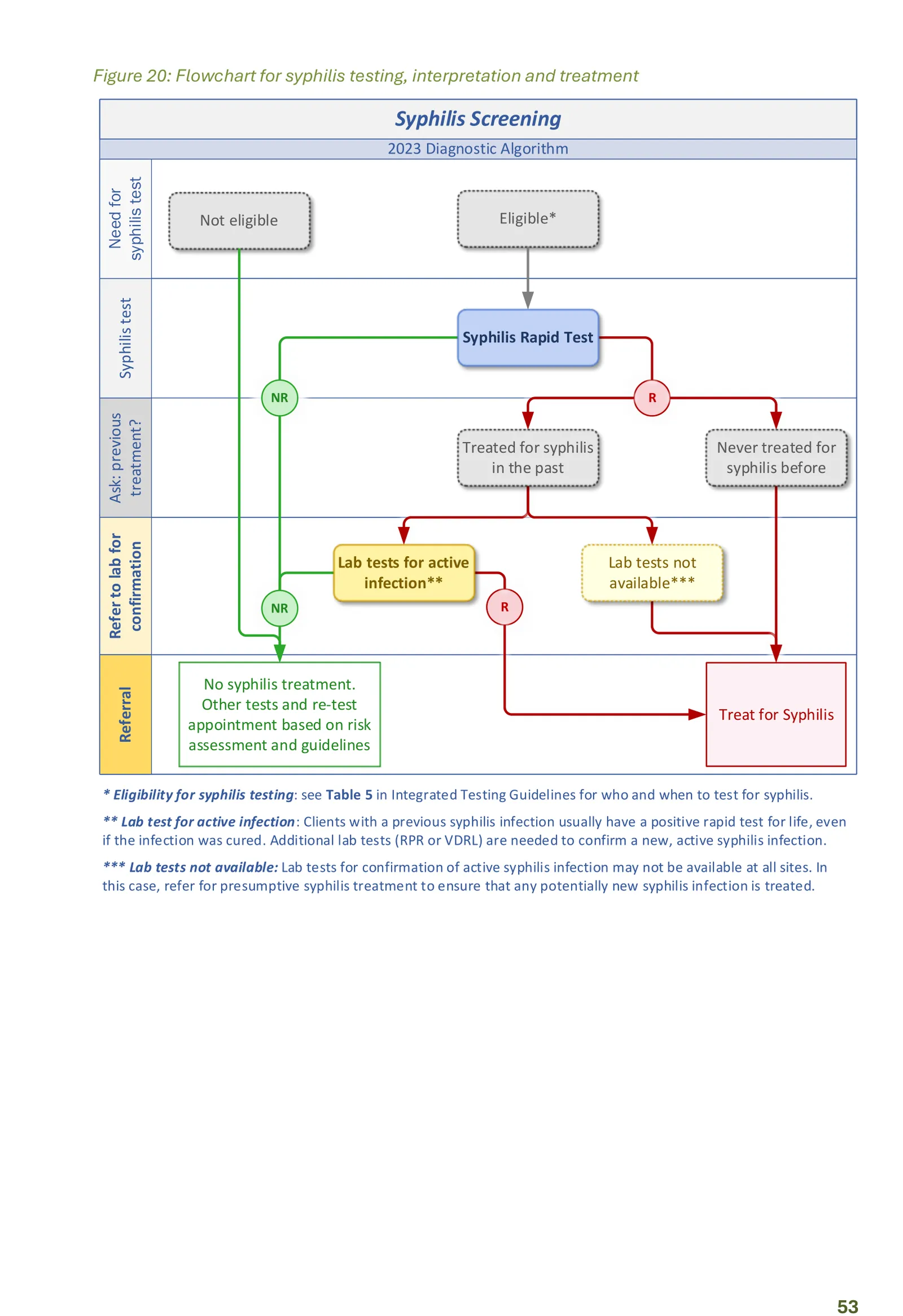
- Use syphilis rapid test only for targeted investigation and screening of high-risk groups (STI patients, pregnant women, key populations). Rapid test does not distinguish current from cured infection — it usually remains positive for life after cure.
- Penicillin is the most effective drug — no antimicrobial resistance known, penetrates placenta. True penicillin allergy is rare (about 3%).
Treatment
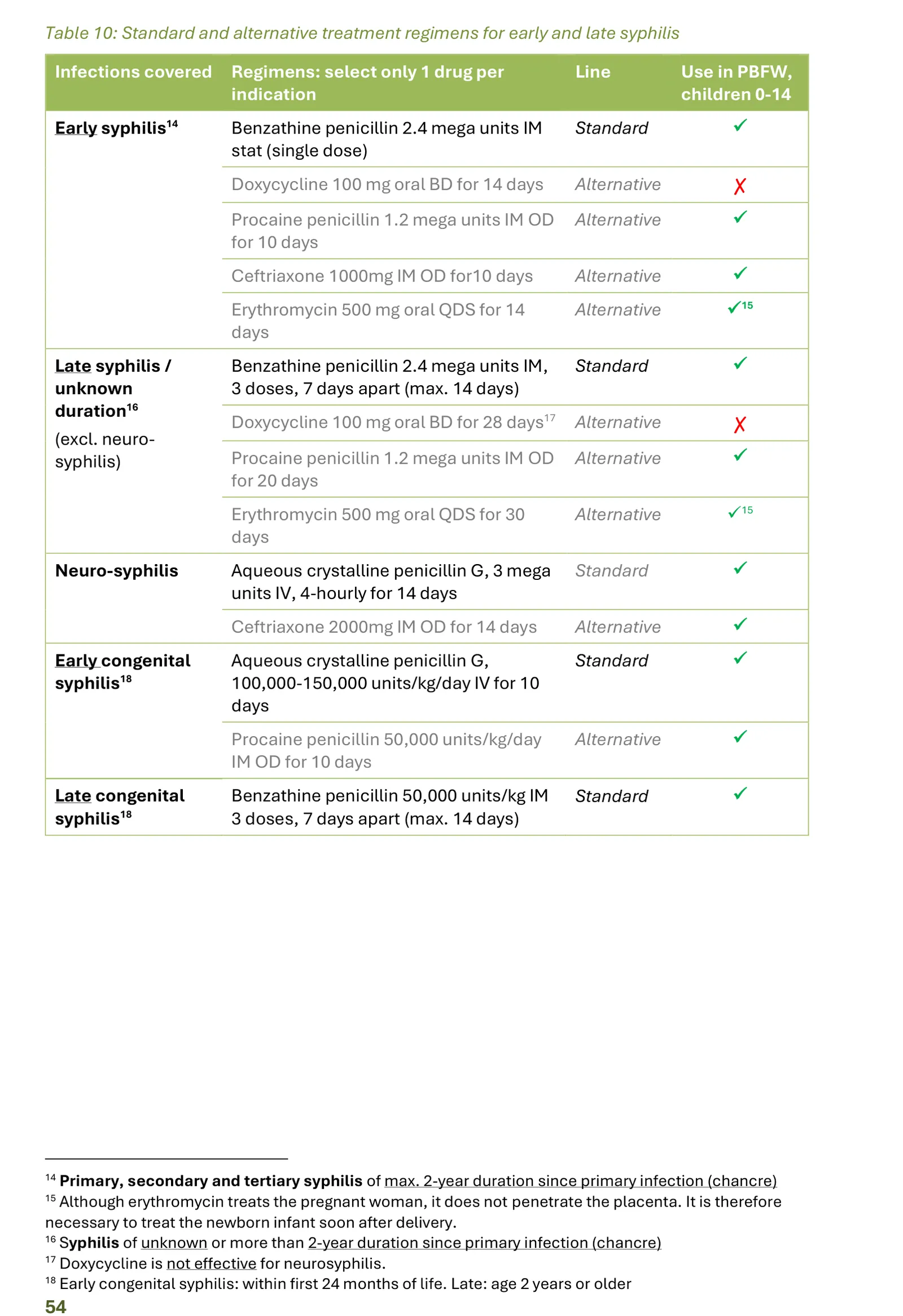
Treatment is not needed if the confirmatory test is negative. Routinely (re-)treat if lab confirmation is not available. Treat for late syphilis if duration since primary infection is unknown. Avoid doxycycline in PBFW and children. Refer suspected tertiary syphilis for specialist management.
Early syphilis (≤ 2 years from primary infection)
- Benzathine penicillin 2.4 mega units IM stat (single dose).
Late syphilis / unknown duration (excluding neurosyphilis)
- Benzathine penicillin 2.4 mega units IM, 3 doses, 7 days apart (max 14 days between doses).
Neurosyphilis
- Aqueous crystalline penicillin G, 3 mega units IV 4-hourly for 14 days.
Tables and figures
Check doses against the printed guideline and your clinical judgement before treating a patient. Spotted an error? Report it from the contact links below.
Need this without data?
The app holds every guideline on your device, with calculators, bookmarks and notes.