6.3
Presumed severe HIV disease in infants (PSHD)
Clinical HIV Guidelines, 5th Edition, 2022. Chapter 6, Diagnosing HIV infection and exposure.
Clinical description
- Infants infected with HIV develop life-threatening HIV-related disease much more quickly than
older children and adults.
- Conduct point of care DNA-PCR testing on site for timely clinical decision making, if available.
- However, it may take too long to confirm HIV infection in a sick infant using DNA-PCR.
- Under the age of 12 months, a positive HIV rapid antibody test does not confirm HIV infection
because maternal antibodies pass through the placenta and remain in the baby’s blood for several months.
- However, a positive rapid antibody test in an infant with the following clinical signs makes severe
HIV disease (AIDS) very likely:
Table 4: Definition of presumed severe HIV disease (PSHD)
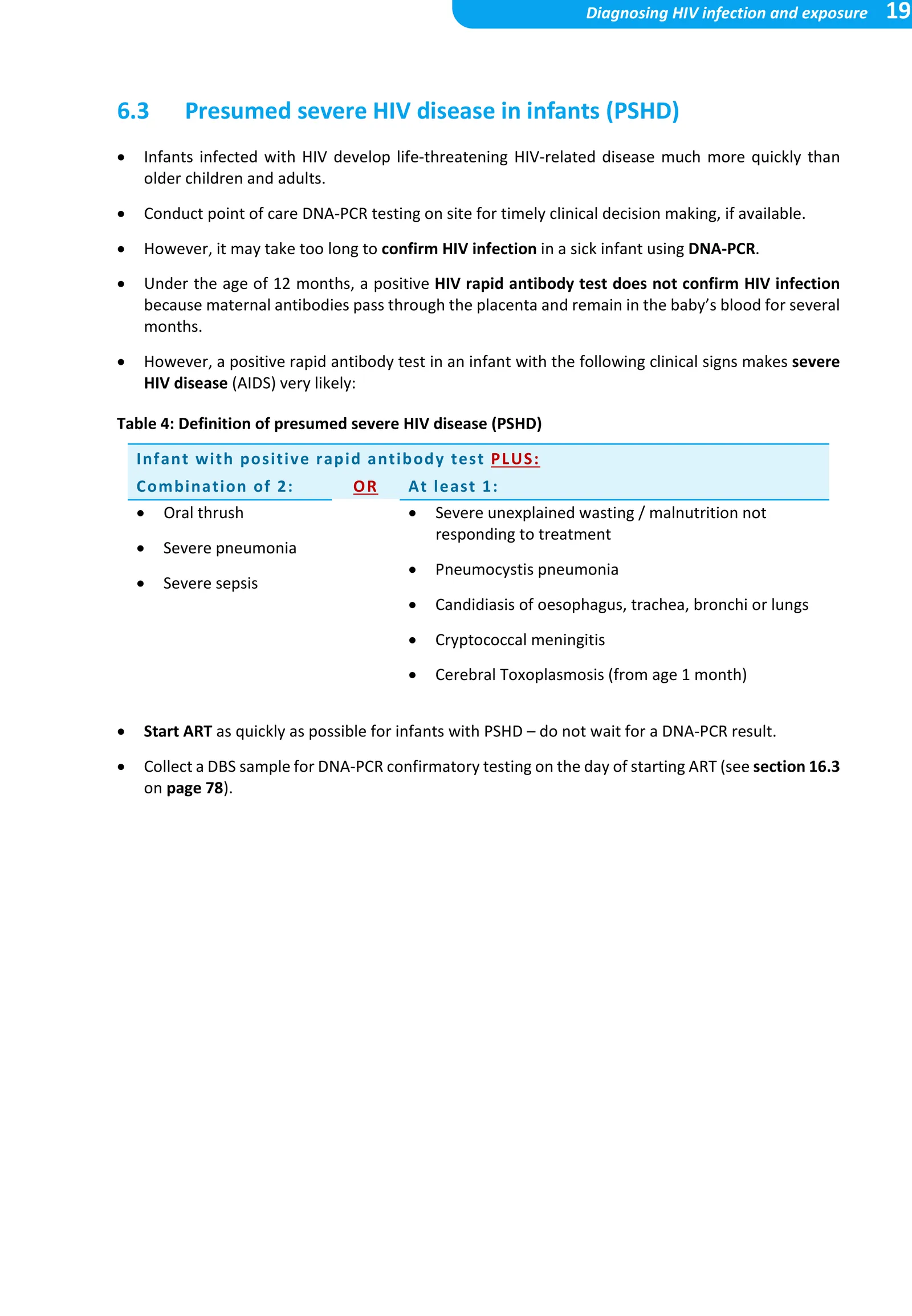
Infant with positive rapid antibody test PLUS:
Combination of 2: OR At least 1:
- Oral thrush • Severe unexplained wasting / malnutrition not
responding to treatment
- Severe pneumonia
- Pneumocystis pneumonia
- Severe sepsis
- Candidiasis of oesophagus, trachea, bronchi or lungs
- Cryptococcal meningitis
- Cerebral Toxoplasmosis (from age 1 month)
- Start ART as quickly as possible for infants with PSHD – do not wait for a DNA-PCR result.
- Collect a DBS sample for DNA-PCR confirmatory testing on the day of starting ART (see section 16.3
on page 78).
Check doses against the printed guideline and your clinical judgement before treating a patient. Spotted an error? Report it from the contact links below.
Need this without data?
The app holds every guideline on your device, with calculators, bookmarks and notes.