
6.2
Routine ascertainment of HIV exposure status for children under 24 months
Clinical HIV Guidelines, 5th Edition, 2022. Chapter 6, Diagnosing HIV infection and exposure.
Clinical description
under 24 months
- Routinely ascertain the mother’s HIV status for all children under 24 months of age seen at the U1
/ U5 clinic, regardless of whether the child is healthy or sick:
o Review mother’s health passport (page 6) for the latest HIV test result
- Initiate a new HIV rapid test:
o For the mother:
- If she is not known to be positive and has not been tested at delivery or thereafter.
o For the child:
- If the mother is not available / has died
- If the child is sick, even if the mother was tested negative during pregnancy or
delivery. Mothers may have been recently infected themselves and the risk of onward transmission to the child is very high under these circumstances.
- There is no indication to routinely retest a child who has tested negative after the period of HIV
exposure has ended, unless there is reason to believe a new exposure has happened (abuse, transfusion, cutting etc.)
- Figure 1 on page 17 shows the conditions for testing of mother and/or child and the actions to be
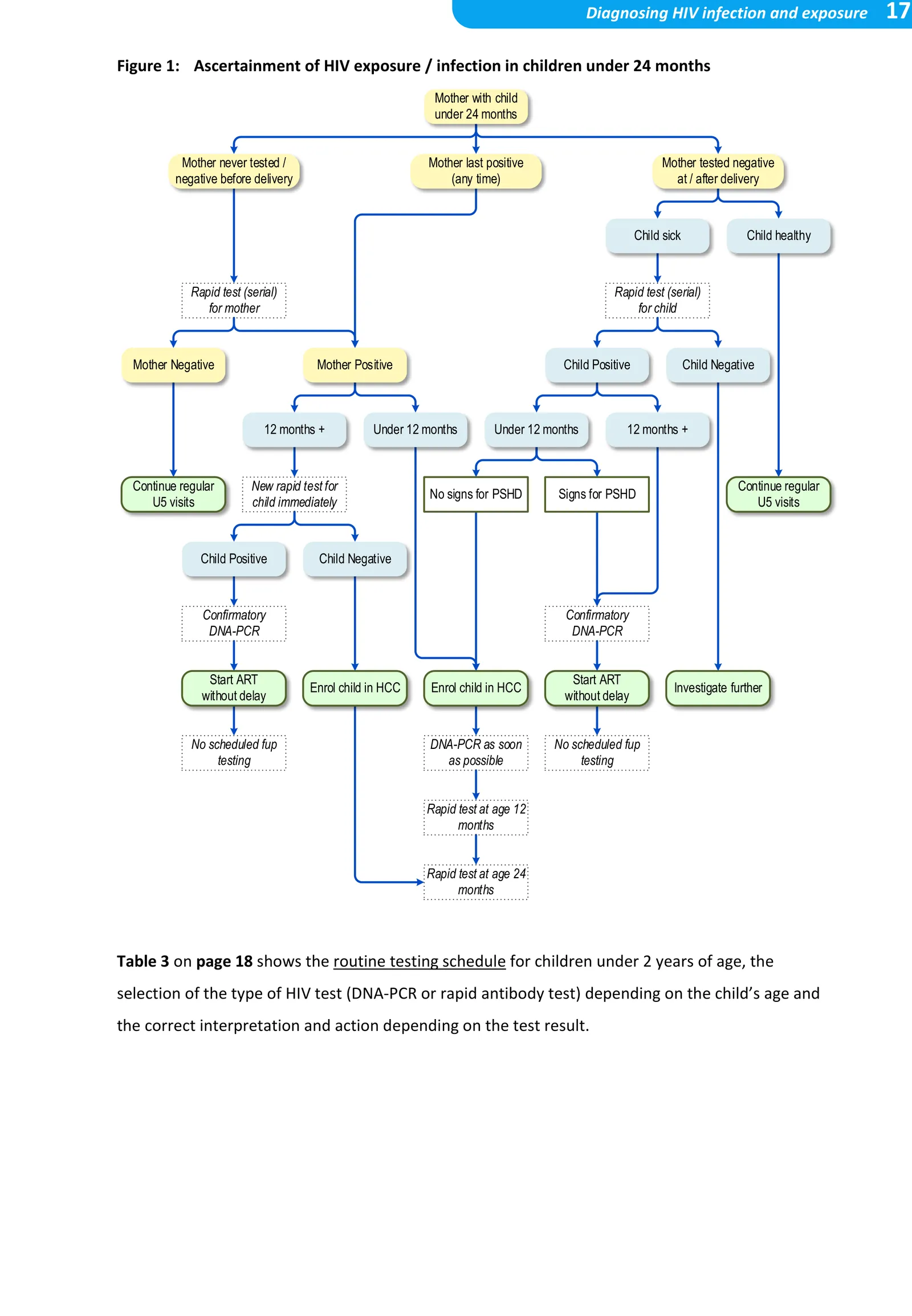
taken.
Diagnosing HIV infection and exposure 17 Figure 1: Ascertainment of HIV exposure / infection in children under 24 months Mother with child under 24 months Mother never tested / Mother last positive Mother tested negative negative before delivery (any time) at / after delivery Child sick Child healthy Rapid test (serial) Rapid test (serial)
for mother for child Mother Negative Mother Positive Child Positive Child Negative 12 months + Under 12 months Under 12 months 12 months + Continue regular New rapid test for Continue regular No signs for PSHD Signs for PSHD U5 visits child immediately U5 visits Child Positive Child Negative Confirmatory Confirmatory DNA-PCR DNA-PCR Start ART Start ART Enrol child in HCC Enrol child in HCC Investigate further without delay without delay No scheduled fup DNA-PCR as soon No scheduled fup testing as possible testing Rapid test at age 12 months Rapid test at age 24 months Table 3 on page 18 shows the routine testing schedule for children under 2 years of age, the selection of the type of HIV test (DNA-PCR or rapid antibody test) depending on the child’s age and the correct interpretation and action depending on the test result.
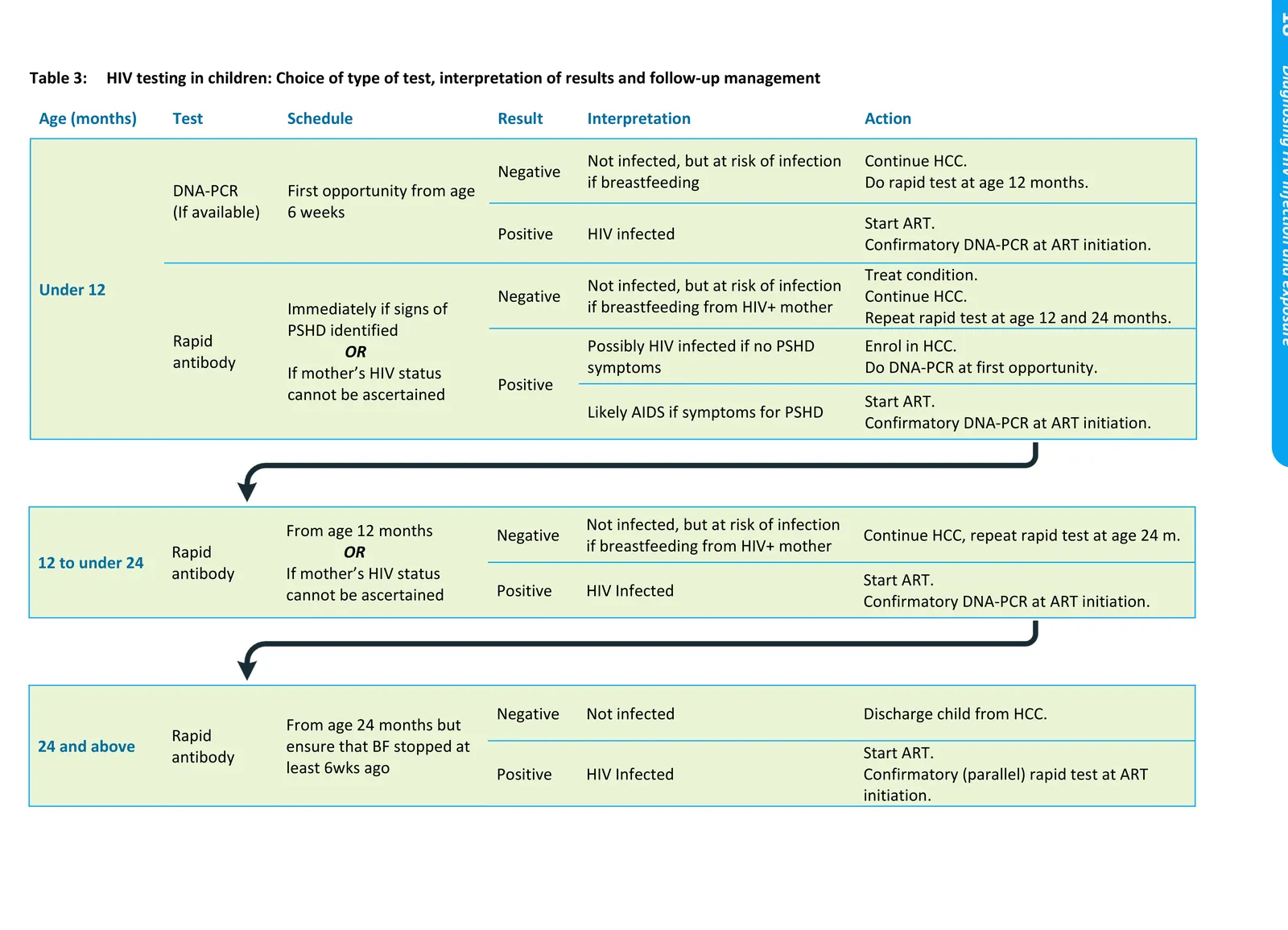
18 Diagnosing HIV infection and exposure Table 3: HIV testing in children: Choice of type of test, interpretation of results and follow-up management Age (months) Test Schedule Result Interpretation Action Not infected, but at risk of infection Continue HCC.
Negative DNA-PCR First opportunity from age if breastfeeding Do rapid test at age 12 months.
(If available) 6 weeks Start ART.
Positive HIV infected Confirmatory DNA-PCR at ART initiation.
Treat condition.
Under 12 Not infected, but at risk of infection Negative Continue HCC.
Immediately if signs of if breastfeeding from HIV+ mother Repeat rapid test at age 12 and 24 months.
PSHD identified Rapid Possibly HIV infected if no PSHD Enrol in HCC.
OR antibody symptoms Do DNA-PCR at first opportunity.
If mother’s HIV status Positive cannot be ascertained Start ART.
Likely AIDS if symptoms for PSHD Confirmatory DNA-PCR at ART initiation.
From age 12 months Not infected, but at risk of infection Negative Continue HCC, repeat rapid test at age 24 m.
Rapid OR if breastfeeding from HIV+ mother 12 to under 24 antibody If mother’s HIV status Start ART.
cannot be ascertained Positive HIV Infected Confirmatory DNA-PCR at ART initiation.
Negative Not infected Discharge child from HCC.
From age 24 months but Rapid 24 and above ensure that BF stopped at Start ART.
antibody least 6wks ago Positive HIV Infected Confirmatory (parallel) rapid test at ART initiation.
Diagnosing HIV infection and exposure
Check doses against the printed guideline and your clinical judgement before treating a patient. Spotted an error? Report it from the contact links below.
Need this without data?
The app holds every guideline on your device, with calculators, bookmarks and notes.