
5.1
LAP — Key Facts & Diagnosis
Guidelines for Management of Sexually Transmitted Infections, 5th Edition, 2025. Chapter 5, Lower Abdominal Pain in Women (LAP).
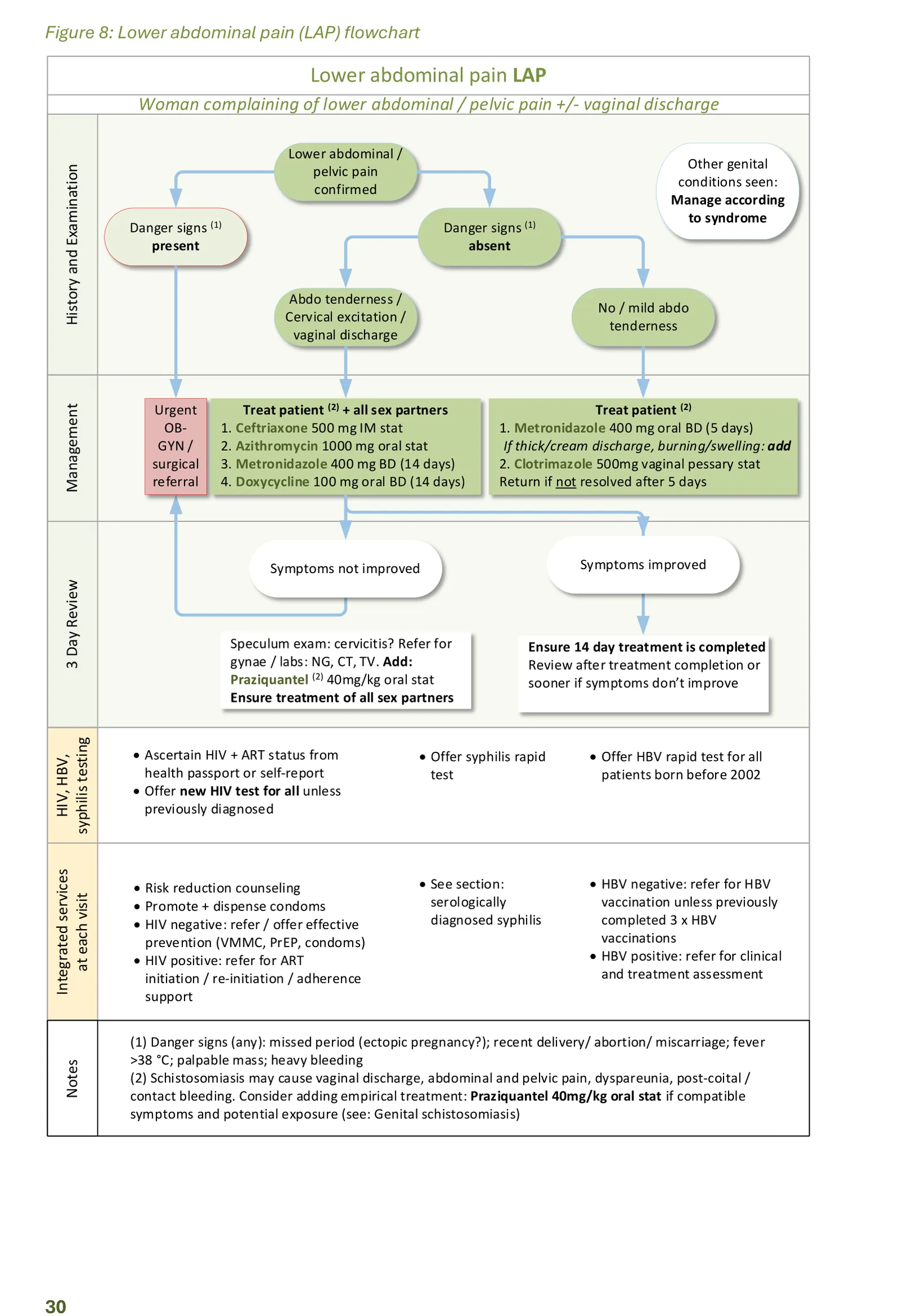
Clinical description
- Main symptoms: lower abdominal/pelvic pain, often bilateral. ± vaginal discharge, irregular menstrual bleeding, dyspareunia, dysuria, fever/chills.
- Wide range of causes: PID (STI and non-STI), gynaecological/obstetric (ectopic pregnancy, abortion, ovarian cyst), surgical (appendicitis, diverticulitis), UTI, gastroenteritis.
- Danger signs: missed period (ectopic?), recent delivery/abortion/miscarriage, fever >38 °C, palpable mass, heavy bleeding. → urgent OB-GYN/surgical referral.
- Syndromic PID treatment covers all common STI and non-STI causes given the potential severity and difficulty identifying the underlying cause.
Treatment
With abdominal tenderness / cervical excitation / vaginal discharge
- Ceftriaxone 500 mg IM stat.
- Azithromycin 1000 mg oral stat.
- Metronidazole 400 mg oral BD for 14 days.
- Doxycycline 100 mg oral BD for 14 days. (Avoid in PBFW and children.)
Mild/no abdominal tenderness
- Metronidazole 400 mg oral BD for 5 days.
- If thick/cream discharge, burning/swelling: add clotrimazole 500 mg vaginal pessary stat.
Always give a 3-day review appointment. If not improved: speculum exam for cervicitis, refer for labs (NG, CT, TV), add praziquantel 40 mg/kg oral stat, ensure partner treatment.
Partner treatment
Partner treatment (asymptomatic)
- Ceftriaxone 500 mg IM stat + azithromycin 1000 mg oral stat + doxycycline 100 mg oral BD for 14 days.
At every visit
HIV & ART status
- Ascertain HIV + ART status from health passport or self-report.
- Offer new HIV test for all unless previously diagnosed. Do not use coercion.
- New positive: active referral for ART initiation.
- New negative: refer/offer PrEP, VMMC, consistent condom use.
- Known positive: reinforce ART adherence or refer for re-initiation.
Hepatitis B
- Offer HBV rapid test for all patients born before 2002.
- HBsAg negative: refer for HBV vaccination unless previously completed 3 doses.
- HBsAg positive: refer for clinical and treatment assessment.
Syphilis screening
- Offer syphilis rapid test for concurrent asymptomatic syphilis (except in GUD/ARI where it does not influence treatment decisions).
Risk reduction & condoms
- Risk reduction counselling. Promote and dispense condoms.
- Promote VMMC for all non-circumcised men. Schedule appointment in 2 weeks.
Tables and figures
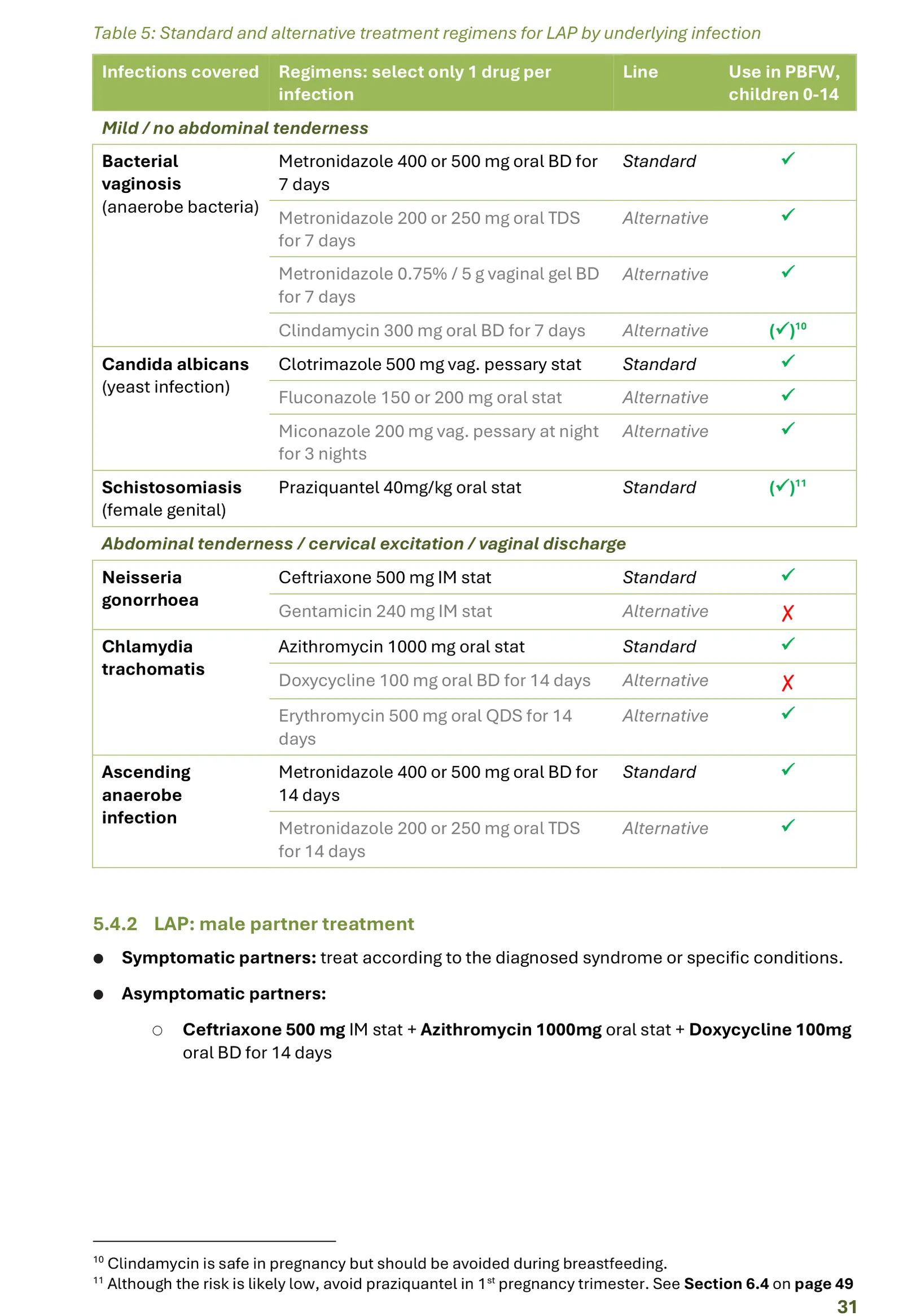
Check doses against the printed guideline and your clinical judgement before treating a patient. Spotted an error? Report it from the contact links below.
Need this without data?
The app holds every guideline on your device, with calculators, bookmarks and notes.