
3.4
Asthma In Pregnancy
Obstetrics & Gynaecology Protocols, Version 3.0, 2017. Chapter 3, Medical Conditions in Pregnancy.
Clinical description
Asthma occurs when there is reversible bronchoconstriction and affects 4-12% of pregnancies.
It is associated with increased risk of mortality, preeclampsia, preterm delivery (PTD) and low birth weight.
Asthma is unpredictable in pregnancy: 1/3 of women report improvement, 1/3 remain the same, and 1/3 worsen.
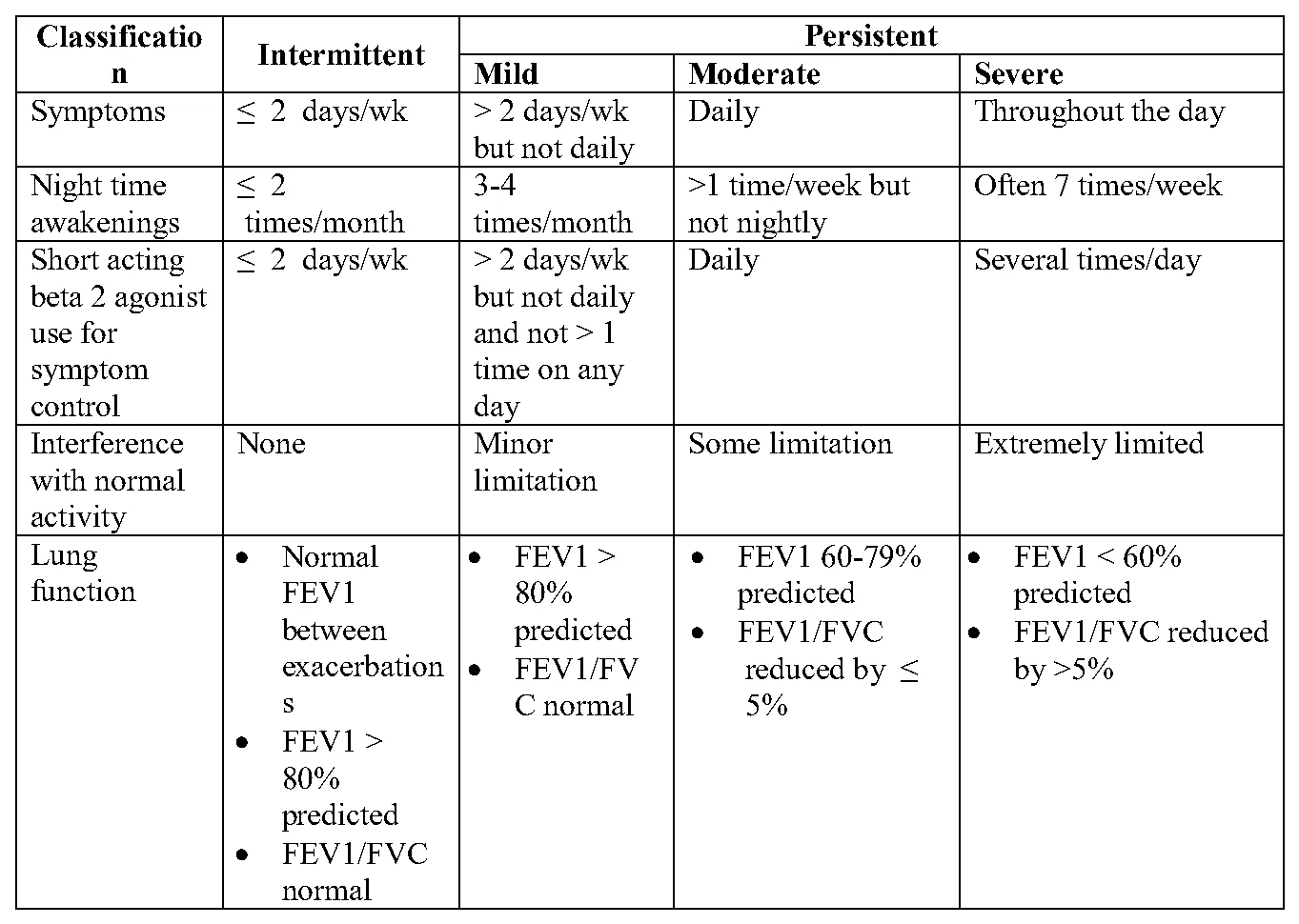
Classificatio Persistent Intermittent n Mild Moderate Severe Symptoms ≤ 2 days/wk > 2 days/wk Daily Throughout the day but not daily Night time ≤ 2 3-4 >1 time/week but Often 7 times/week awakenings times/month times/month not nightly Short acting ≤ 2 days/wk > 2 days/wk Daily Several times/day beta 2 agonist but not daily use for and not > 1 symptom time on any control day Interference None Minor Some limitation Extremely limited with normal limitation activity Lung • Normal • FEV1 > • FEV1 60-79% • FEV1 < 60% function FEV1 80% predicted predicted between predicted • FEV1/FVC • FEV1/FVC reduced exacerbation • FEV1/FV reduced by ≤ by >5% s C normal 5% 80% predicted normal
Signs and symptoms
History/ExamTrigger (often viral), chest tightness, shortness of breath; cough, wheezing, decreased pulse ox InvestigationsPeak flow meter or spirometry, pulse oximetry
Treatment
Avoid triggers and use inhaled corticosteroids to decrease underlying inflammation
- Antenatal clinic visit monthly if on regular meds
- Peak flow meter BD (first thing in the morning and 12 hrs later) if available
- Avoid allergens and tobacco
- Avoid GERD in 3rd trimester by using PPI or H2 blocker
- For mild - moderate persistent asthma: salbutamol inhaler 1-2 puffs TDS or corticosteroid inhaler (i.e.
beclomethasone)
- For acute and/or severe exacerbations:
- Admit to HDU
Clinical description
- O2 therapy to keep SaO2 >95%
- inhaled bronchodilator (salbutamol, ipromium bromide and normal saline)through a nebulizer or
spacer every 10-20 min until improvement seen
- IV fluids
- IV Aminophylline 250 mg over 10 min or MGSo4 2g stat
- Sit up
- 4-hourly fetal monitoring
- Systemic steroids (i.e. hydrocortisone or prednisone IV) for up to 5-7 days
- Continuously assess response to treatment, complete response is resolution of symptoms and
Incomplete response is continuation of symptoms PEFR<80% personal best Urgent intervention required when PEFR <50% personal best
- Indication for intubation and ventilation: inability to maintain respiratory drive, worsening hypercapnia,
respiratory acidosis, confusion and inability to maintain SpO2> 95% despite high flow oxygen
- Intrapartum management: continue regular inhaler prn
- Use of IV hydrocortisone if patient has been on oral steroids >7.5mg/day for >2 weeks
- Misoprostol if indication for labour induction
- Oxytocin if PPH
- Avoid use of PGF and ergometrine
2
Tables and figures
Check doses against the printed guideline and your clinical judgement before treating a patient. Spotted an error? Report it from the contact links below.
Need this without data?
The app holds every guideline on your device, with calculators, bookmarks and notes.