
9.1
NC — Key Facts & Diagnosis
Guidelines for Management of Sexually Transmitted Infections, 5th Edition, 2025. Chapter 9, Neonatal Conjunctivitis (NC).
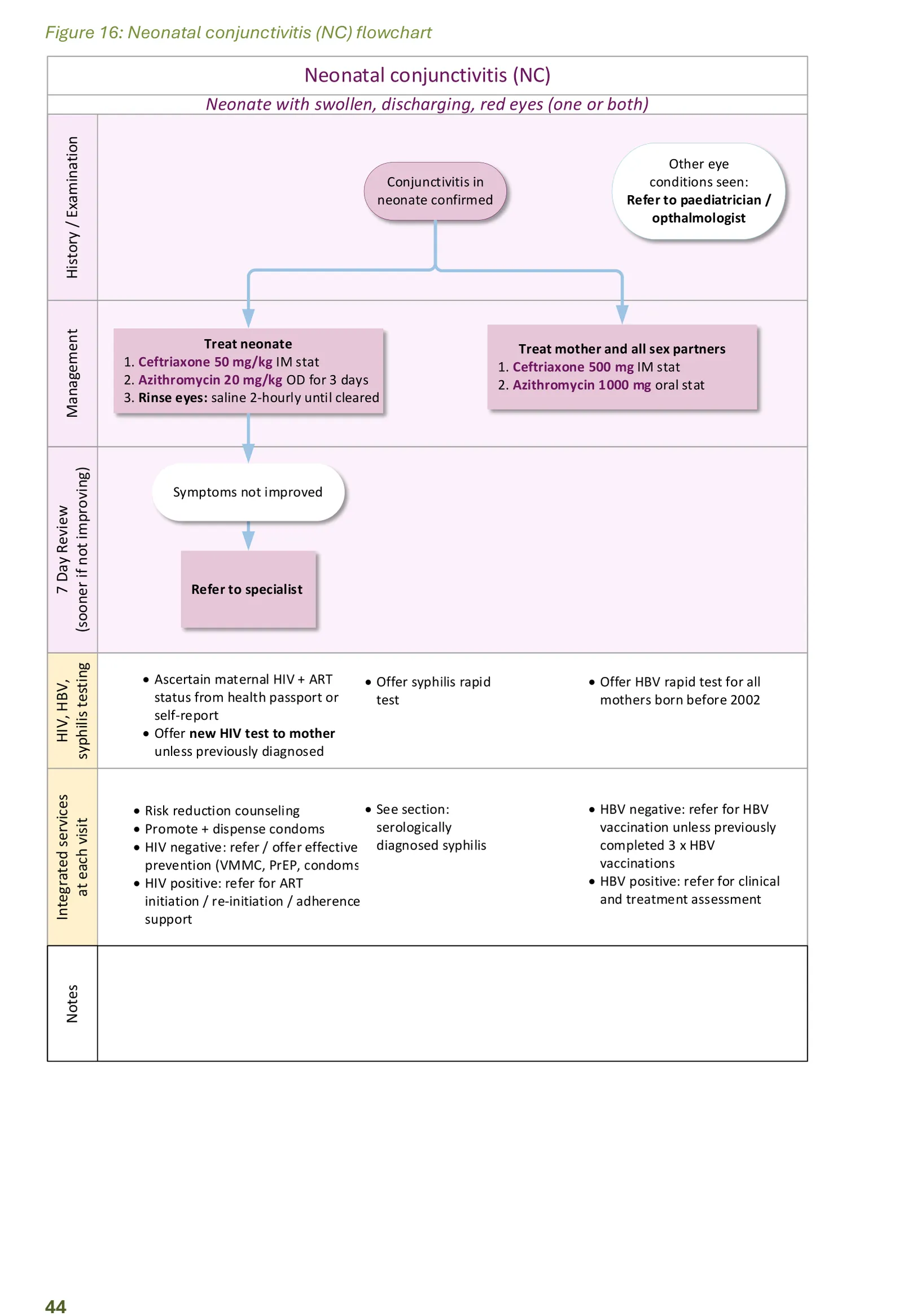
Clinical description
Neonatal conjunctivitis (ophthalmia neonatorum) is infection of the eyes in the first 4 weeks of life.
- Main symptoms: discharge, swelling, redness of lid/conjunctiva in one or both eyes during the first 4 weeks of life.
- NC is a very serious condition that can cause blindness if not appropriately managed — refer immediately to District or Central Hospital.
- STI causes (most common): Neisseria gonorrhoea, Chlamydia trachomatis, HSV-2.
- Non-STI causes: Staphylococcus, Pseudomonas aeruginosa, chemical irritation.
- NC is more common in neonates of HIV-infected mothers.
Prevention
- Routinely screen pregnant women for cervicitis and treat.
- Apply antibiotic or antiseptic eye ointment as part of routine newborn care: tetracycline 1% or erythromycin 0.5% or silver nitrate 1%.
Treatment
Medical emergency. Treat by experienced clinician/nurse at District or Central Hospital. Look for disseminated disease. Rinse eyes with sterile isotonic saline every 2 hours until improved. Do not cover/patch eyes. Do not give topical antibiotics or antiseptic drops/ointments.
Standard treatment — neonate
- Ceftriaxone 50 mg/kg IM stat.
- Azithromycin 20 mg/kg oral OD for 3 days.
- Rinse eyes: saline 2-hourly until cleared.
Partner treatment
Standard treatment — mother and all sex partners
- Ceftriaxone 500 mg IM stat.
- Azithromycin 1000 mg oral stat.
If symptoms not improved at 7 days: refer to specialist.
At every visit
HIV & ART status
- Ascertain HIV + ART status from health passport or self-report.
- Offer new HIV test for all unless previously diagnosed. Do not use coercion.
- New positive: active referral for ART initiation.
- New negative: refer/offer PrEP, VMMC, consistent condom use.
- Known positive: reinforce ART adherence or refer for re-initiation.
Hepatitis B
- Offer HBV rapid test for all patients born before 2002.
- HBsAg negative: refer for HBV vaccination unless previously completed 3 doses.
- HBsAg positive: refer for clinical and treatment assessment.
Syphilis screening
- Offer syphilis rapid test for concurrent asymptomatic syphilis (except in GUD/ARI where it does not influence treatment decisions).
Risk reduction & condoms
- Risk reduction counselling. Promote and dispense condoms.
- Promote VMMC for all non-circumcised men. Schedule appointment in 2 weeks.
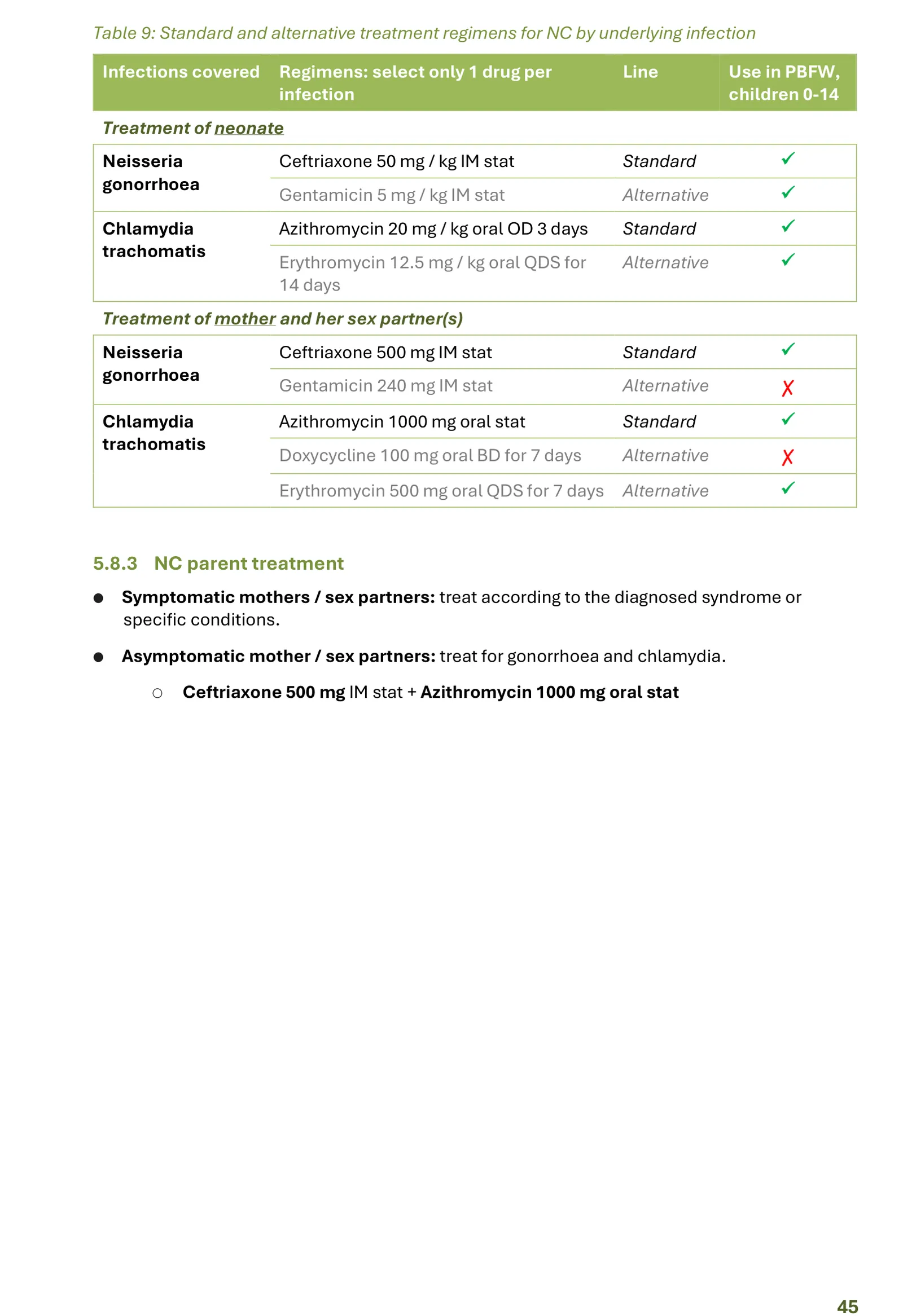
Tables and figures
Check doses against the printed guideline and your clinical judgement before treating a patient. Spotted an error? Report it from the contact links below.
Need this without data?
The app holds every guideline on your device, with calculators, bookmarks and notes.